
You want to validate an idea as an MVP
Define the core journey people will actually use and launch it as a web or app product.
MVP · Operations Systems · AI Automation
We clarify what to build first, then connect design, implementation, launch, and operations through one accountable partner.
Product Engineering
Live-service improvement
For MVNO Hub, we reduced a bottleneck query from 13s to 0.4s and delivered carrier-order and notification flows.
A good fit when
Your plan does not need to be complete. We define the problem and priority together, then start with the smallest useful release.
Define the core journey people will actually use and launch it as a web or app product.
Connect admin tools, data, and external APIs to reduce repeated work and operating errors.
Turn OCR, document summaries, and search assistance into features with validation, cost control, and logs.
Explore the scope and result behind app launches, public and B2B systems, and AI product work.
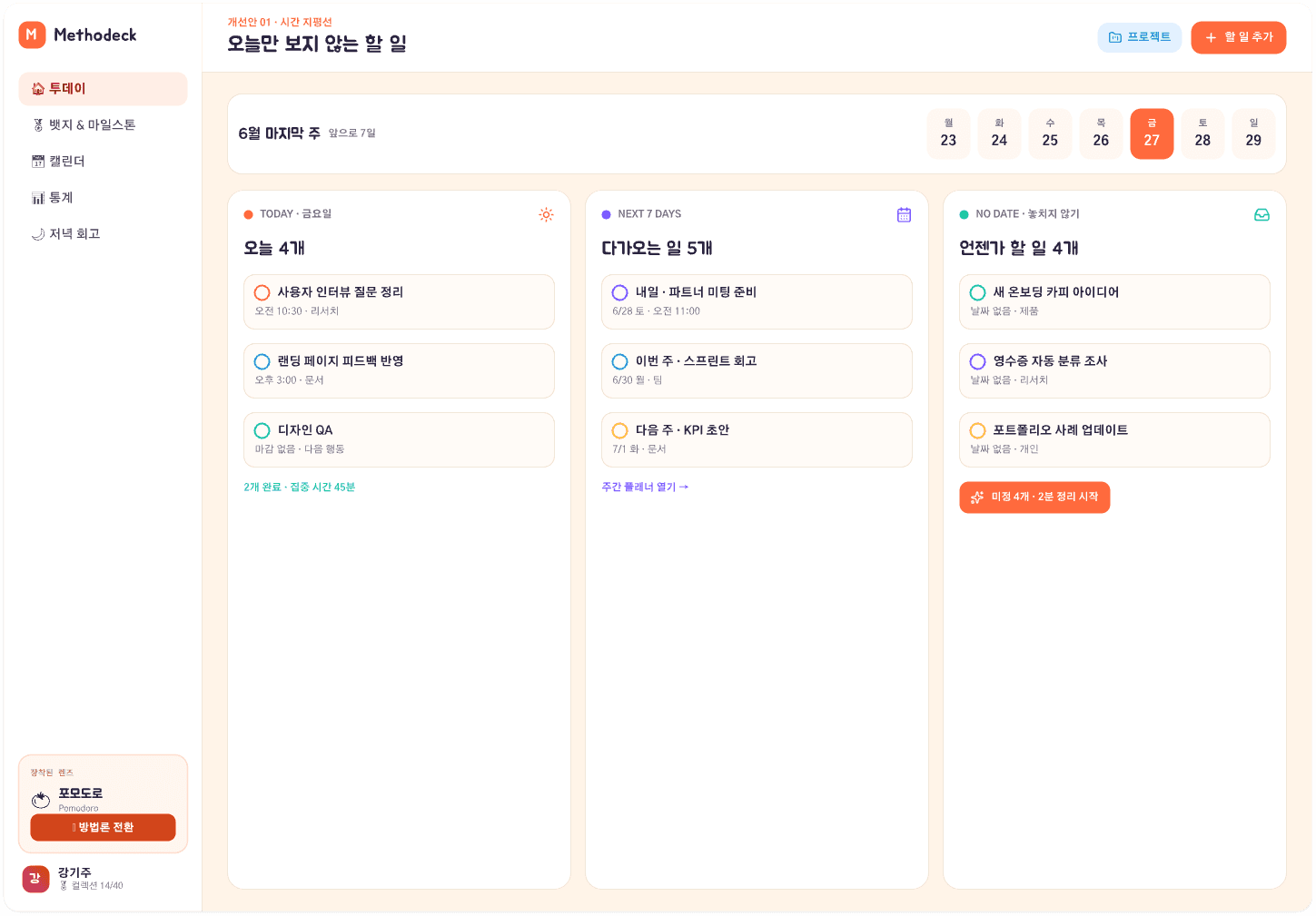
A live personal productivity web service that keeps one shared task pool, reinterprets it through six execution methodologies, and turns verified activity into rewards.
Proof
Built and deployed a Turborepo product spanning Next.js, NestJS, PostgreSQL, shared contracts, and methodology definitions
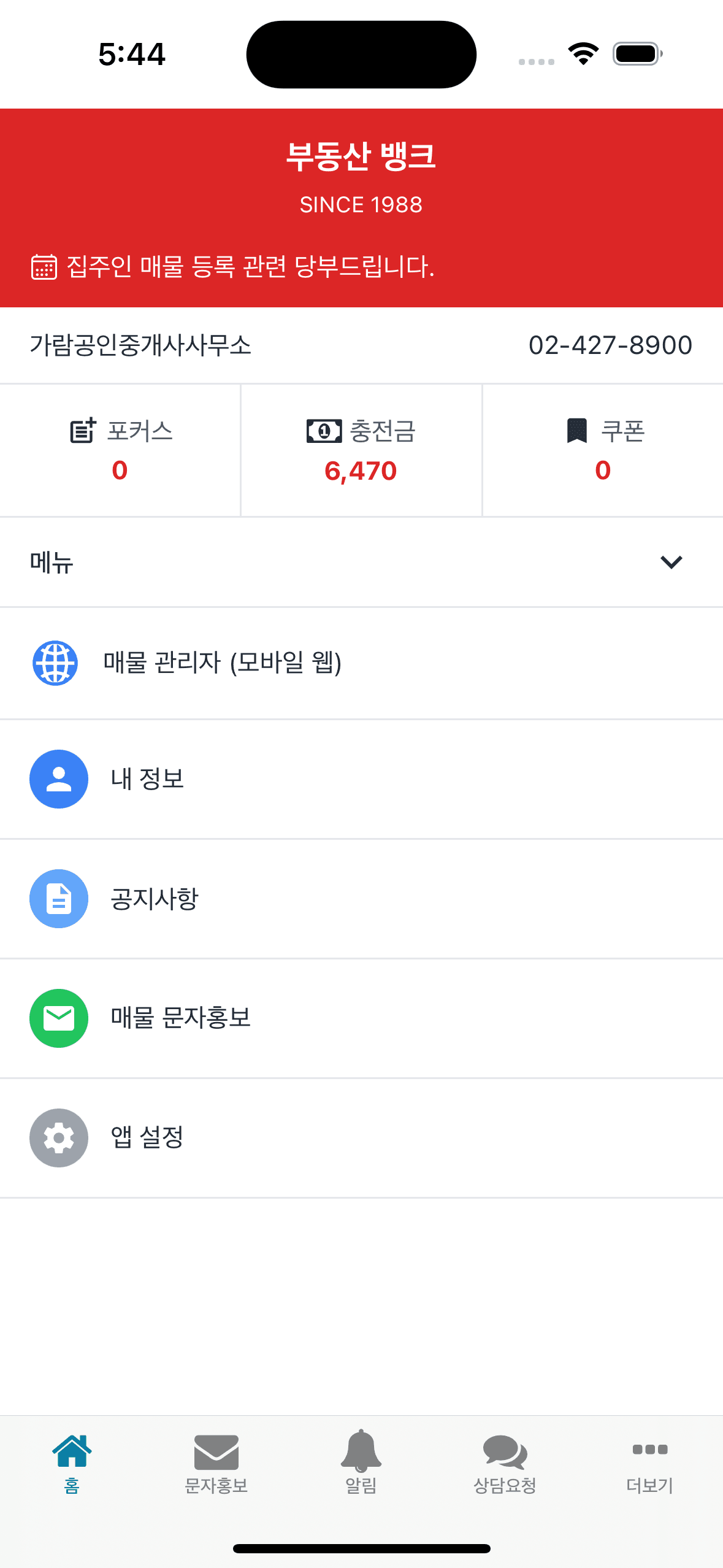
A cross-platform business app for real estate agency members, released on both iOS and Android and operated for 1,000+ registered users.
Proof
Released the app on both App Store and Google Play
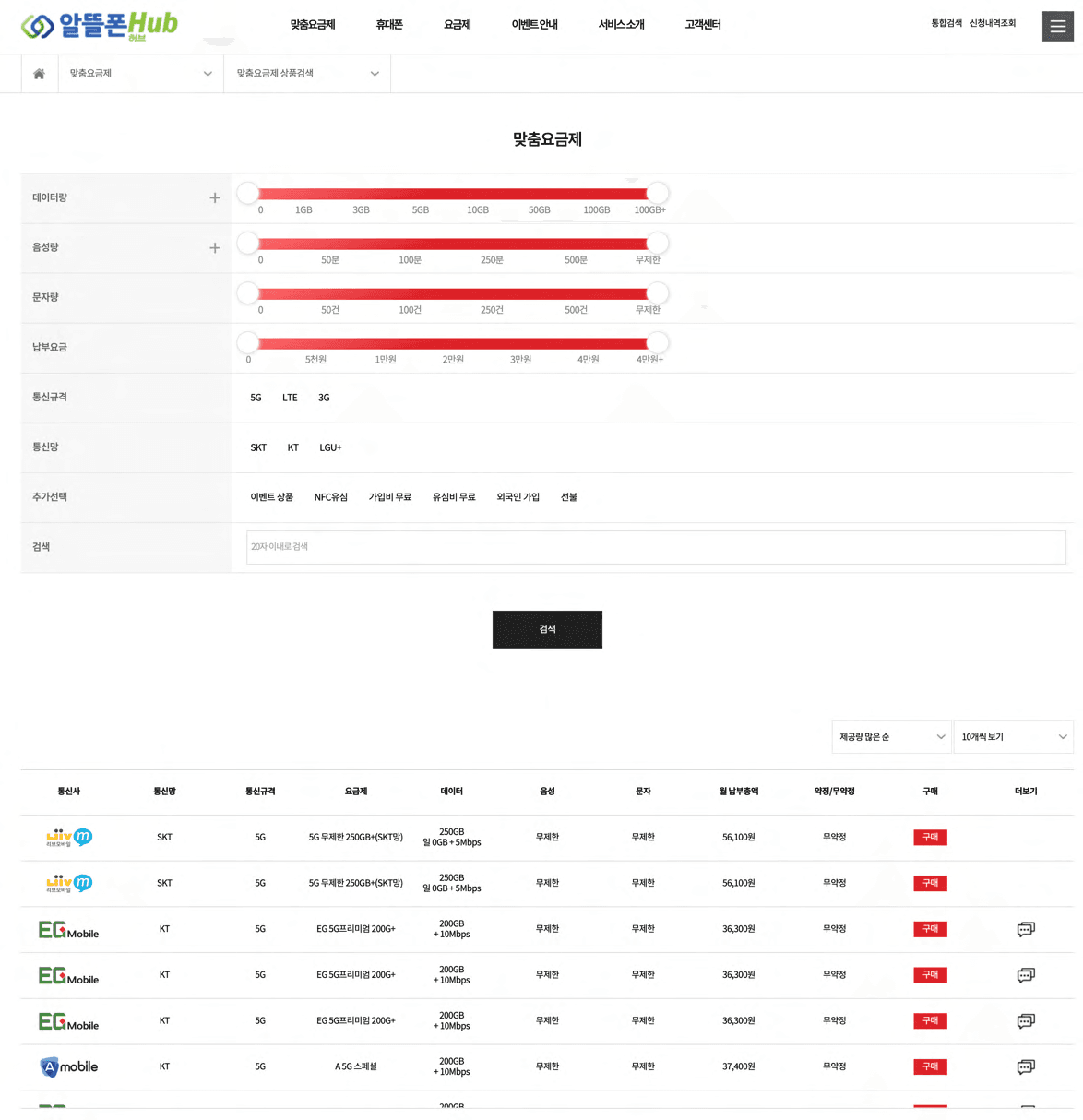
A public-service renewal project that delivered telecom order integration APIs, order-status Kakao AlimTalk notifications, and a 32x Oracle query improvement.
Proof
Delivered real-time order integration APIs for external telecom operators
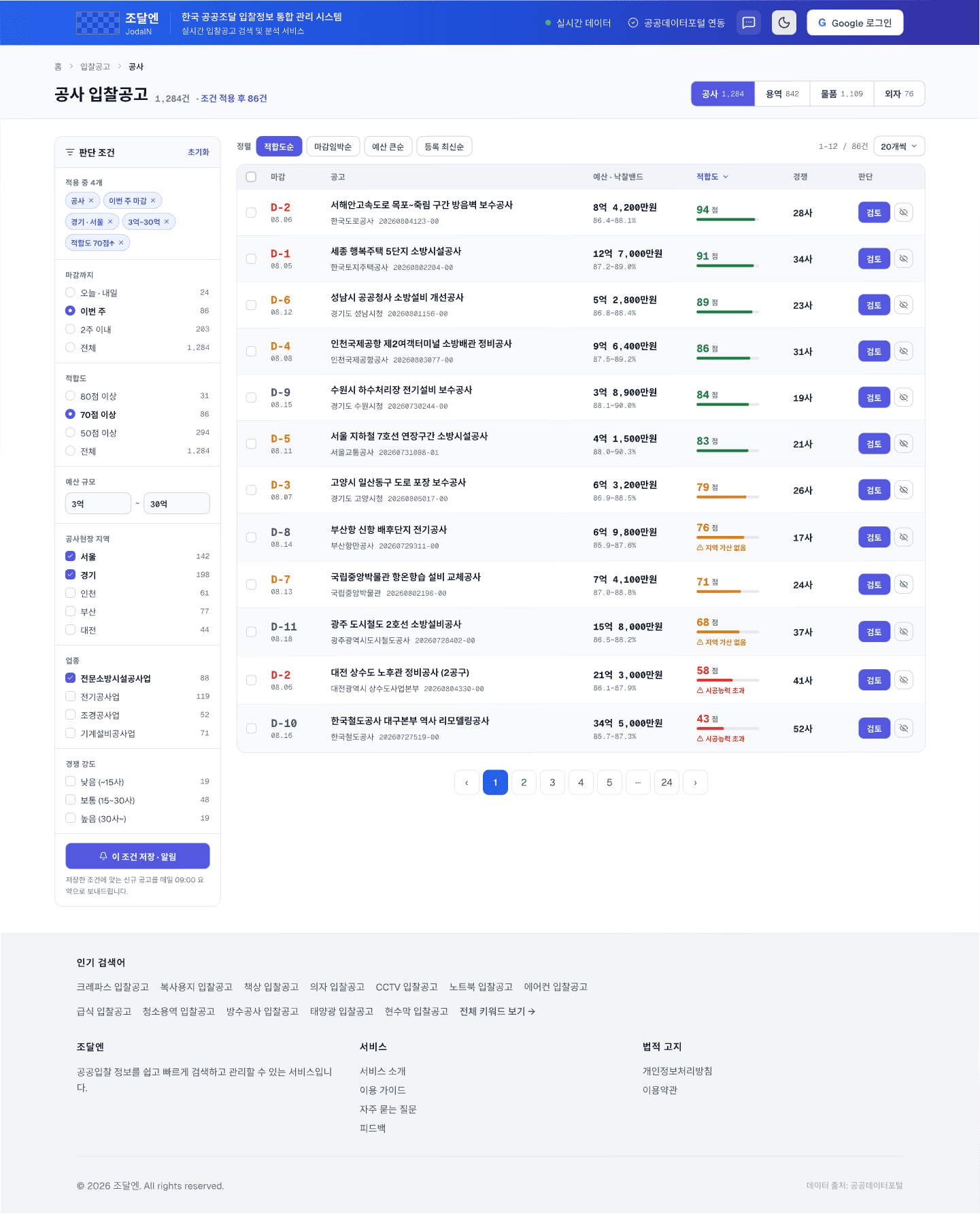
A production-grade public procurement SaaS that collects Korean G2B bid data, summarizes attached documents with LLMs, and supports high-speed search.
Proof
Cloud SQL snapshot (2026-08-26): recorded 135,997 instrumented user activities and 830,889 live bid-notice rows
Open-source libraries
Rather than keeping recurring engineering boundaries inside one product, we publish them as TypeScript packages with install paths, platform boundaries, focused examples, and API references.
10 documented packages
@gj-kit/expo-uiAccessible, token-driven UI primitives for Expo, React Native, and the web.
Read package documentation →@gj-kit/expo-mediaAn Expo and React Native media pipeline with explicit adapters and durable file boundaries.
Read package documentation →@gj-kit/expo-authCross-platform token lifecycle primitives with coordinated refresh and storage adapters.
Read package documentation →@gj-kit/expo-workoutsA native bridge for HealthKit and Health Connect workouts, routes, authorization, and incremental sync.
Read package documentation →@gj-kit/formatExplicit TypeScript formatting for dates, numbers, bytes, durations, and Korean currency.
Read package documentation →@gj-kit/nest-operations-jobsNestJS composition for durable, authenticated, observable operations jobs with explicit store ports.
Read package documentation →@gj-kit/nest-notificationsNestJS composition for transactional notification relay, dispatch, presentation, and Expo push boundaries.
Read package documentation →@gj-kit/toss-paymentsType-safe Toss Payments widget and API v2 flows for TypeScript servers and browsers.
Read package documentation →@gj-kit/toss-payments-nestjsNestJS DI and raw-body webhook composition for @gj-kit/toss-payments.
Read package documentation →@gj-kit/toss-payments-postgresqlPostgreSQL stores, migrations, inbox, and encryption seams for @gj-kit/toss-payments.
Read package documentation →Check it yourself
The hardest part of hiring a one-person studio is that every claim is self-reported. Everything below is a public record you can open right now.
Public app store metric
BudongsanBank Agency Manager - 10,000+ downloads on Google Play
Open Google Play listing →Delivered service running today
MVNO Hub - a public-facing service you can open and use
Open mvnohub.kr →CNCF certification
Kubestronaut - all five Kubernetes certifications (CKA, CKAD, CKS, KCNA, KCSA)
About the Kubestronaut program →Reappointed three times
Naver Connect Foundation Boostcamp backend code reviewer - 2022, 2023, 2025
Open commit history
Actual working history and open-source contributions on GitHub
github.com/apeltop →This site's measured performance
We sell Core Web Vitals, so measure this site first rather than taking our word for it
Run PageSpeed Insights →How we work
We share the decisions that matter at each stage to reduce uncertainty around timing and outcomes.
Identify users, operating context, must-have functionality, expected usage, data shape, and external API cost before agreeing on the first release scope.
Design and build the screens, data, integrations, and operating requirements as one flow.
Check critical scenarios and prepare deployment, store release, and the operating environment.
Use logs and real usage to identify issues and set the next improvement priority.
We clarify user flows, operating constraints, expected usage, and recurring costs instead of simply translating a feature list into screens.
Frontend, backend, database, and deployment are connected as one product system.
Performance, testing, deployment, logs, and handover are prepared for real operation.
What We Build
We define a practical delivery scope around your current problem. Each service details its scope and related work.
Build search-friendly web products, admin consoles, and dashboards with Next.js App Router.
What this makes possible
Pages become discoverable and indexable
Build iOS and Android products with Expo, React Native, and a production-minded mobile architecture.
What this makes possible
Launch both stores from one codebase
Connect document summarization, OCR, structured generation, and search assistance into real product workflows.
What this makes possible
Automate repetitive document processing
Build data collection pipelines for dynamic pages, large files, and long-running jobs.
What this makes possible
Handle heterogeneous site structures
Prepare deployment, logs, tests, and infrastructure automation so MVPs can become live services.
What this makes possible
Reduce manual deployment risk
Project scale
A firm quote follows a fixed scope. To help you size things before a call, here is how past projects group into three bands.
Timeline: About 4-8 weeks
When you need real users in front of the idea before investing further
Timeline: About 2-4 months
When the system will be used daily by staff or customers
Timeline: About 4 months and up
When data volume or traffic means the operating architecture comes first
Price follows the agreed scope rather than the band. If you already have a budget, we start by proposing what is achievable inside it, and we say so directly when it is not a fit.
Independent Product Engineer
Founding member of CNCK, the official CNCF community in Korea - Community Ops Sub-leader
I have built and operated public and B2B operations systems, mobile products, and data collection services. I personally carry the context from consultation through design, implementation, and deployment, without a handoff layer in between.
CNCF
CNCF Kubestronaut
Awarded by the CNCF to engineers holding all five Kubernetes certifications. Earned as the 104th Kubestronaut in Korea, covering security (CKS, KCSA) as well as administration and development.
About the Kubestronaut program →Questions before you start
Yes. Share the problem, intended users, and current pain point, and we can define the first release scope together.
Yes. We prioritize the necessary work, then connect the product surface, API, data, and deployment into one delivery flow.
Yes. We first inspect the current structure and reproducible issue, then propose the impact area and improvement order.
Your project goal, target timing, and any reference service or material are enough. Budget and detailed scope can be clarified together.
This is the most common question, and a fair one. Three things cover it. First, code and infrastructure are set up under your accounts and repositories from day one, so another engineer can pick the work up at any point. Second, design decisions, deployment steps, and environment variables are documented alongside the work. Third, if anything prevents normal progress for more than three business days, we tell you immediately and you choose between rescheduling and terminating with a settlement.
At most two at a time. During the first conversation we tell you what is already in flight and when we can start. If schedules would collide, we propose a realistic start date or decline rather than overcommitting.
We share a written progress update once a week and flag a delay as soon as it becomes likely, never on the due date itself. If the delay is on our side, we adjust the schedule at no extra cost. If it comes from a requirement change, we propose the revised scope and timeline and agree it with you before continuing.
Reviewing only at the end is what creates that problem. We ask for a checkpoint each time a core screen or flow is ready, so work does not run long in the wrong direction. Anything built differently from what we agreed is corrected at no cost. If the requirement itself changed, we re-estimate the scope and timeline together.
Thirty days of free defect fixes after delivery. Anything that does not behave as agreed is corrected at no cost within that window. New features or ongoing operations are arranged as a separate maintenance agreement, and you receive the handover documentation and deployment procedure either way.
Yes. Ask at any point, including before the first detailed conversation, and we sign before discussing specifics. Material you share is used only for the proposal and the work itself, and nothing is published as a case study without your prior agreement.
Ownership transfers to you on final payment. Repositories, deployment environments, and third-party service accounts are either created under your organization or transferred at handover.
Project consultation
Tell us what you want to build and where things stand. We reply within one business day with a workable scope and the next step.